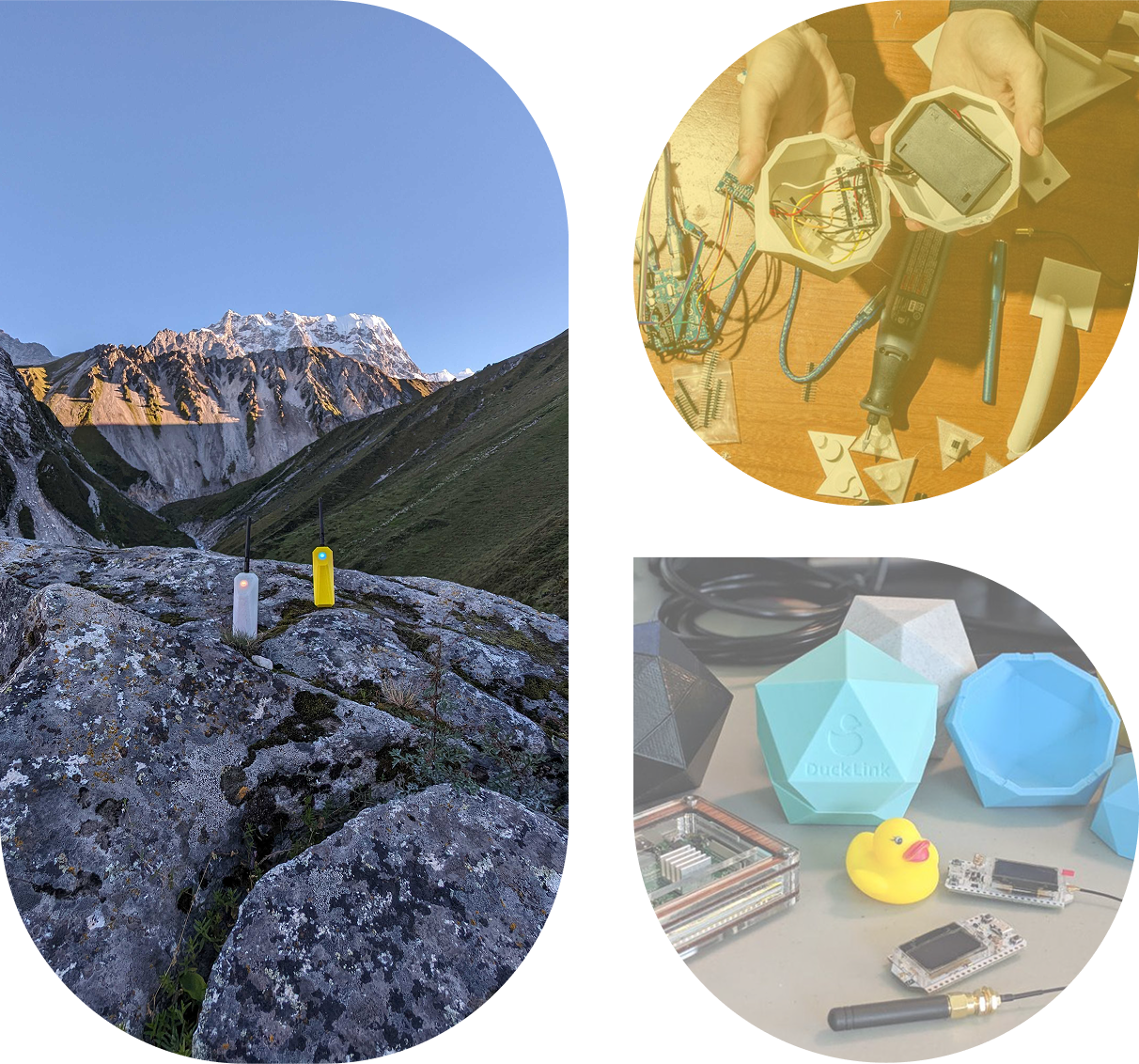
In 2017, Hurricane Maria, a category-5 storm, severely impacted Puerto Rico, demolishing homes and communication infrastructure. To address this issue, the ClusterDuck Protocol (CDP) was developed in 2018. It utilizes battery-powered Internet-of-Things devices to reestablish essential communication during emergencies, allowing civilians to request assistance, share their locations, and receive vital information from local governments and responders.
The ClusterDuck Protocol runs on a variety of IoT hardware, including many ESP32 Arduinos.
Here is a list of hardware we use, though there may be many others that work. We recommend the Heltec LoRa ESP32 and the TTGO T-Beam ESP32.
For a simple network you will want to make at least two Ducks. For bigger networks you will need more.
To start developing, you will need PlatformIO on your computer.
Download or git clone the CDP library from GitHub.
Follow the installation instructions here
Please Note: With the Release of the ClusterDuck Protocol Version 4 we have different instructions. If you are looking for older instructions please go here
Connect your board to platform IO
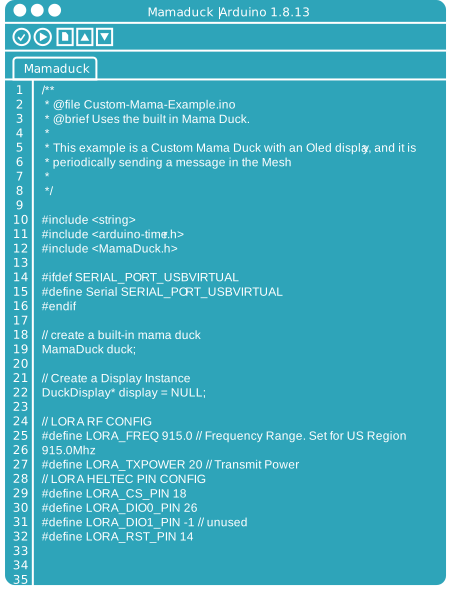
Follow the these updates instructions for loading up a Duck to get one running.
Use the pre-built examples or develop custom Ducks of your own.
Deploy!
"The Rise of Desi Digital: How Indian Lifestyle and Entertainment Videos are Taking Over the Internet"
There are no "top latest indian mms videos." There are only crime scenes, digital archives of sexual assault, and the shattered lives of Indian citizens. The next time the morbid urge to search for this term arises, search instead for "cyber crime reporting India," or "how to support victims of revenge porn," or "Indian laws on non-consensual pornography." Those searches can actually make a difference. They can save a life. They can build a safer internet for everyone. latest indian mms video top
The rise of Indian lifestyle and entertainment videos has had a significant impact on the digital landscape: "The Rise of Desi Digital: How Indian Lifestyle
The algorithms (Meta's and Google's) currently prioritize: They can build a safer internet for everyone
Parents need to talk to their sons and daughters about consent – not just physical, but digital consent. Schools need to include digital citizenship and the legal consequences of cybercrime in their curricula. Platforms need to proactively use AI to hash and block known non-consensual content before it goes viral.
But what exactly constitutes the "latest" in this space? In a country where 700 million+ active internet users consume content in over 22 languages, the landscape of lifestyle and entertainment video is fragmenting, specializing, and accelerating at a breathtaking pace. From the glitzy backdrops of Bollywood to the minimalist desks of a Chennai productivity vlogger, here is your deep dive into the current state of play.